Why It Feels Like Doctors Don’t Care (Even When They Do)
Jan 01, 2026
I love talking with my patients and meeting new ones who come to my private practice. I almost always ask, “How did you hear about us?” mostly out of curiosity.
I hear all kinds of answers.
“I found you on Zocdoc.”
“My insurance changed.”
“My sister sees you and told me to come also.”
But one response comes up again and again:
“I wanted a new doctor because I felt like my last one didn’t care.”
Recently, a patient told me about visits with her previous doctor. She had chronic back and knee pain, and felt exhausted all the time. Each time she raised these concerns, she was told it was because she was obese and needed to lose weight. She explained that she had tried. Exercise was difficult because of her pain, and dieting was hard to sustain given the cost of healthy food, a highly stressful and demanding job, and a family history of obesity that likely included genetic contributors. These complex, interconnected issues simply don’t fit into a rushed visit.
She left those appointments feeling unheard, dismissed, and embarrassed.
She ended by saying, “I just want a doctor who cares.”
This story isn’t unusual. I hear versions of it all the time.
And my response is almost always the same.
“I’m really sorry that happened to you. I know it may not feel like it, but I don’t think your doctor didn’t care. I think he/she probably cared a lot, but sometimes the circumstances make it difficult to show it.”
What patients experience as a lack of caring is often something else entirely.
It’s a healthcare system that makes it nearly impossible to practice medicine the way doctors want to, or the way patients deserve.
This disconnect isn’t accidental. It’s structural.
Let me explain.
A study by Avalere Health-Physician Advocacy Institute showed over 73% of physicians were employed in 2022, compared to 25% in 2012. This means hospital systems and corporate entities have been aggressively consolidating healthcare by buying physician practices particularly in the post COVID-19 era. Most employed primary care physicians are expected to see 18 to 30 patients per day. Appointments slots are often scheduled for 10 to 20 minutes each, and patients may be double or even triple-booked to account for no-shows.
In that short window, doctors are expected to take a full history, perform an exam, formulate a diagnosis and treatment plan, and document the visit. Most physicians are unable to complete documentation in real time not because they’re inefficient, but because they’re actually listening and talking with patients take time.
So the rest of the work spills into lunch breaks, evenings and weekends: answering inbox messages, refilling prescriptions, completing disability and school forms, submitting prior authorizations, reviewing labs and imaging, and calling patients back. Sometimes a single phone call takes as long as a full visit.
One study found that the mean time required for primary care physicians to provide guideline recommended care for their patients estimated to be a total of 26.7 hours per day.
It’s not just demanding, it’s literally impossible.
And all this happens while trying to remain fully present with the person sitting in front of us.
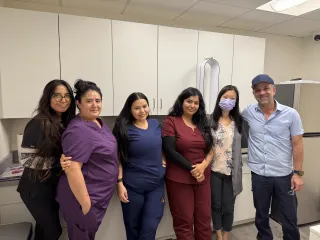
As a physician in private practice, I am one of the few in my area who still accepts Medi-Cal, despite extremely low reimbursement rates. We work hard to keep the lights on while caring for patients in the way they deserve.
I often run behind, not because I don’t respect my patients’ time, but because I care about them. I listen. I talk with them. I don’t rush through stories that matter. I have the privilege of doing this because I chose autonomy, because I no longer wanted to practice in a way that felt misaligned with my values.
Unfortunately, many doctors don’t feel like they have that option. The financial risk is significant, and so is the debt. When I graduated, I had over $480,000 in student loans. Paying for a mortgage, a car, daily living expenses while still allocating over half my paycheck each month toward loan repayment is daunting. Taking a step into the unknown with this amount of debt feels terrifying. Physicians in particular, by nature of our training, are incredibly risk averse. It is not just how we practice medicine, but also how we navigate our careers.
Some people ask, “Why don’t doctors just see fewer patients?”
For employed physicians, the answer is simple: they’re under constant pressure to meet productivity targets set by their organization. Compensation, performance reviews, and job security are often tied directly to volume.
For private practices, the answer is more painful. Seeing fewer patients often means not being able to pay staff, stay open, or continue serving underserved communities.
My medical assistants spend much of their day doing invisible labor like tracking down referrals, fighting insurance denials, navigating authorizations, and advocating relentlessly on behalf of our patients.
This is the part patients rarely see.
So when patients tell me they feel like doctors don’t care, I hear something deeper.
They feel unheard, rushed, and dismissed by a system that prioritizes efficiency over humanity.
And that hurts both sides of the exam room.
Most doctors don’t go into medicine because they don’t care. They go into medicine because they care deeply. They spend years studying, training, and sacrificing their prime because they want to help people.
Then they graduate into a system that asks them to do the impossible every single day.
I believe doctors care very deeply about their patients.
But the responsibility of caring for patients, along with mounting administrative demands and the pressure of corporate profits have been unfairly placed almost entirely on physicians.
The American healthcare system is profoundly broken. The US spends twice as much per person on health as the average peer nation, with a growing share driven by administrative costs rather than direct patient care. Administrative expenditures increased by more than 87% between 2011 to 2023, fueled in large part by burdensome practices by commercial insurers. As a result, our system now spends more money battling insurance companies, paying layers of management, and sustaining overhead than it does supporting patients and the physicians who care for them.
So telling doctors they must simply see more patients to stay in business is not only unfair, it’s counterproductive. Instead, I challenge our healthcare system to rethink how resources are allocated. If we truly want to reduce costs and improve care, we must invest more in primary and preventive care, reduce administrative waste, eliminate unnecessary middlemen who extract value without improving outcomes, and give back primary care physicians the one thing that patients want: their attention, time and presence.
A version of this has been published on: https://www.psychologytoday.com/us/blog/the-other-side-of-the-white-coat/202512/why-it-feels-like-doctors-dont-care-even-when-they-do
References
- Porter J, Boyd C, Skandari MR, Laiteerapong N. (2023). Revisiting the Time Needed to Provide Adult Primary Care. J Gen Intern Med 38(1):147-155. doi: 10.1007/s11606-022-07707-x. PMID: 35776372; PMCID: PMC9848034.Ani Turner, George Miller, and Elise Lowry. (2023).
- High U.S. Health Care Spending: Where Is It All Going? Commonwealth Fund. https://doi.org/10.26099/r6j5-6e66
- Physician Advocacy Institute, Avalere Health. (2023). Physician Employment Trends Study 2019–2023. Accessed from https://www.physiciansadvocacyinstitute.org/Portals/0/assets/docs/PAI-Research/PAI-Avalere%20Physician%20Employment%20Trends%20Study%202019-2023%20Final.pdf
- Trilliant Health. (2025). Hospital Administrative Expenditures Exceed Direct Patient Care by Nearly 2x. Accessed December 11, 2025. https://www.trillianthealth.com/market-research/studies/hospital-administrative-expenditures-exceed-direct-patient-care-by-nearly-2x

